Travel Hacks and Tips

8 countries with current entry restrictions for US passport holders

Julian Cross
4.5
May 01, 2026

While the United States passport is often considered a golden ticket to global travel, the reality of international diplomacy and security means that certain doors remain firmly shut. In 2026, a complex web of geopolitical tensions, safety concerns, and legal restrictions continues to limit where Americans can fly. For some destinations, the "not welcome" sign is posted by the U.S. government through legal bans, while in others, foreign governments have suspended the very visas needed to enter.

Understanding these restrictions is about more than just checking a map; it is about recognizing the high stakes of modern travel. From nations in the midst of internal conflict to those using visa suspensions as political leverage, these locations represent the most difficult places for a U.S. citizen to visit right now. This guide provides a factual look at why these borders are restricted and what travelers need to know about the current global landscape.

Below are some of the key countries where Americans face significant barriers, along with the real reasons behind those restrictions.
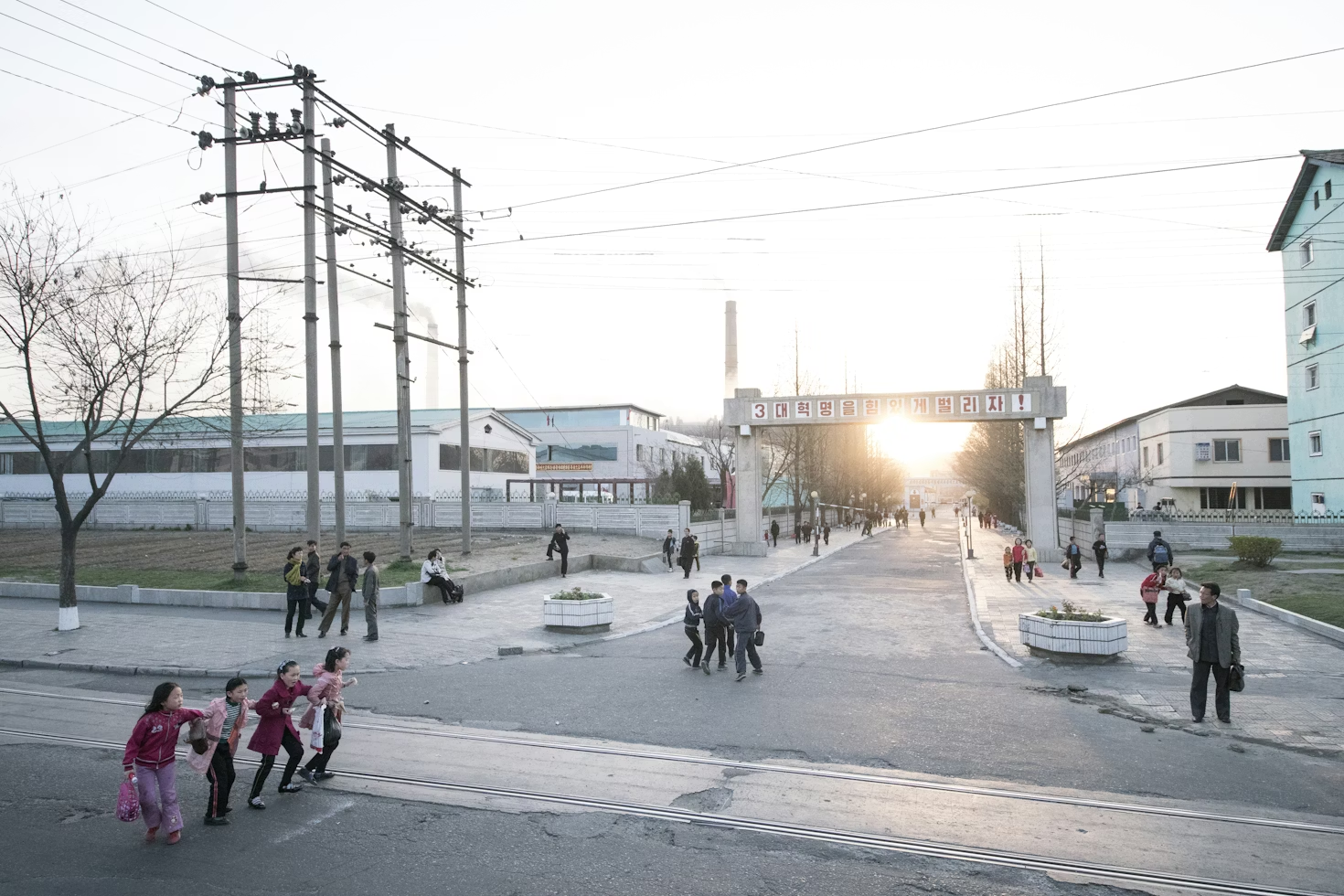
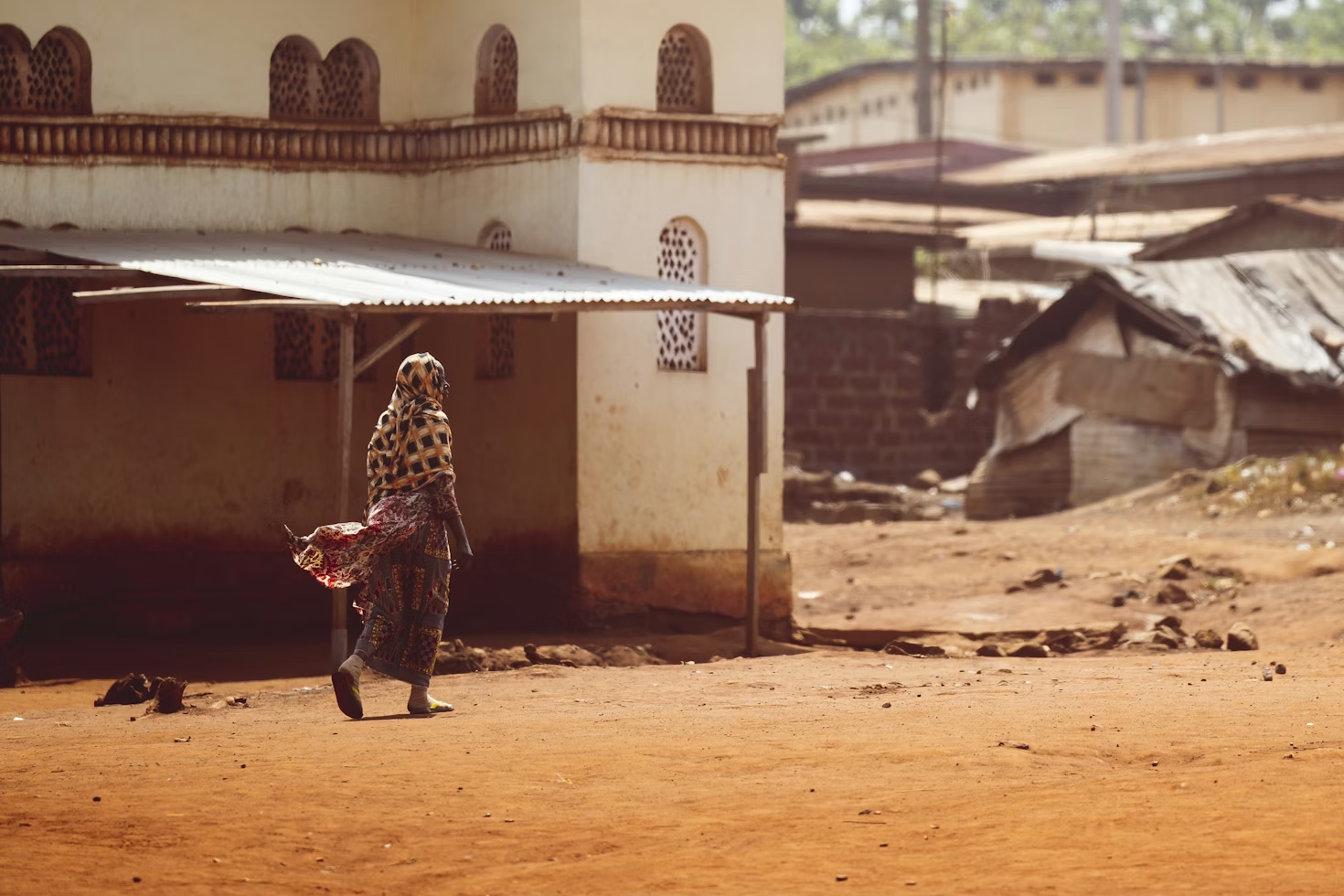
1. North Korea
© Unsplash / randominstitute

1. North Korea

Reason: Full travel ban and lack of diplomatic protection

North Korea remains one of the most closed-off countries in the world, and for Americans, travel is essentially prohibited. The U.S. government has imposed a near-total ban on its citizens visiting the country, except in extremely rare cases where special permission is granted.

This restriction is largely due to safety concerns and the absence of U.S. diplomatic presence. Since there is no American embassy operating in North Korea, travelers would have no direct access to help in case of legal trouble, detention, or emergencies.

The situation became even more serious after past incidents involving detained American visitors, which highlighted the risks of traveling there. As a result, visiting North Korea is not just difficult; it is legally restricted for most U.S. citizens.

In short, Americans are effectively barred from visiting.

2. Iran
© Unsplash / Hossein Nasr

2. Iran

Reason: Strict government control and long-standing political tensions

Iran does allow American visitors, but under highly controlled conditions. Unlike most countries where tourists can travel independently, U.S. citizens must typically book through authorized travel agencies, follow a pre-approved itinerary, and be accompanied by a government-approved guide.

These rules exist because of decades of strained diplomatic relations between the United States and Iran. Authorities closely monitor foreign visitors, particularly Americans, to maintain security and control.

While Iran is rich in history, architecture, and culture, the experience for American tourists is very different from typical travel freedom.

In short, travel is allowed but only under tight supervision.

3. Mali
© Unsplash / Bob Brewer

3. Mali

Reason: Reciprocal visa policies and diplomatic strain

Mali has, at times, imposed restrictions on American travelers as part of a broader diplomatic response to U.S. policies. This approach is based on the idea of reciprocity, where countries mirror each other’s visa rules and restrictions.

If one country tightens entry requirements, the other may respond similarly. In Mali’s case, political instability and changing international relationships have contributed to a more complicated travel environment for Americans.

Additionally, ongoing security concerns within the country further limit tourism overall.

In short, political relations and security issues both play a role.

4. Burkina Faso
© Unsplash / Ben White

4. Burkina Faso

Reason: Diplomatic retaliation and security concerns

Like Mali, Burkina Faso has also been affected by a mix of political tension and safety risks. Travel restrictions involving Americans are influenced partly by reciprocal policies and partly by internal instability.

The country has experienced increasing security challenges in recent years, including armed conflict and extremist activity. These factors have made it difficult not only for Americans but for most international tourists to visit safely.

In short, travel is limited due to both politics and serious safety risks.

5. Turkmenistan
© Unsplash / igrigoriy

5. Turkmenistan

Reason: Highly restrictive visa system and controlled tourism

Turkmenistan is technically open to tourists, but it is widely considered one of the hardest countries in the world to visit. For Americans, the process is especially complicated.

Visitors are often required to obtain a visa in advance, book a government-approved tour, follow a fixed travel itinerary, and limit movement to approved areas.

The government maintains tight control over tourism, meaning spontaneous exploration is rarely allowed.

Despite its unique landscapes and historical sites, Turkmenistan’s strict rules make it an uncommon destination for American travelers.

In short, entry is possible but extremely restricted.

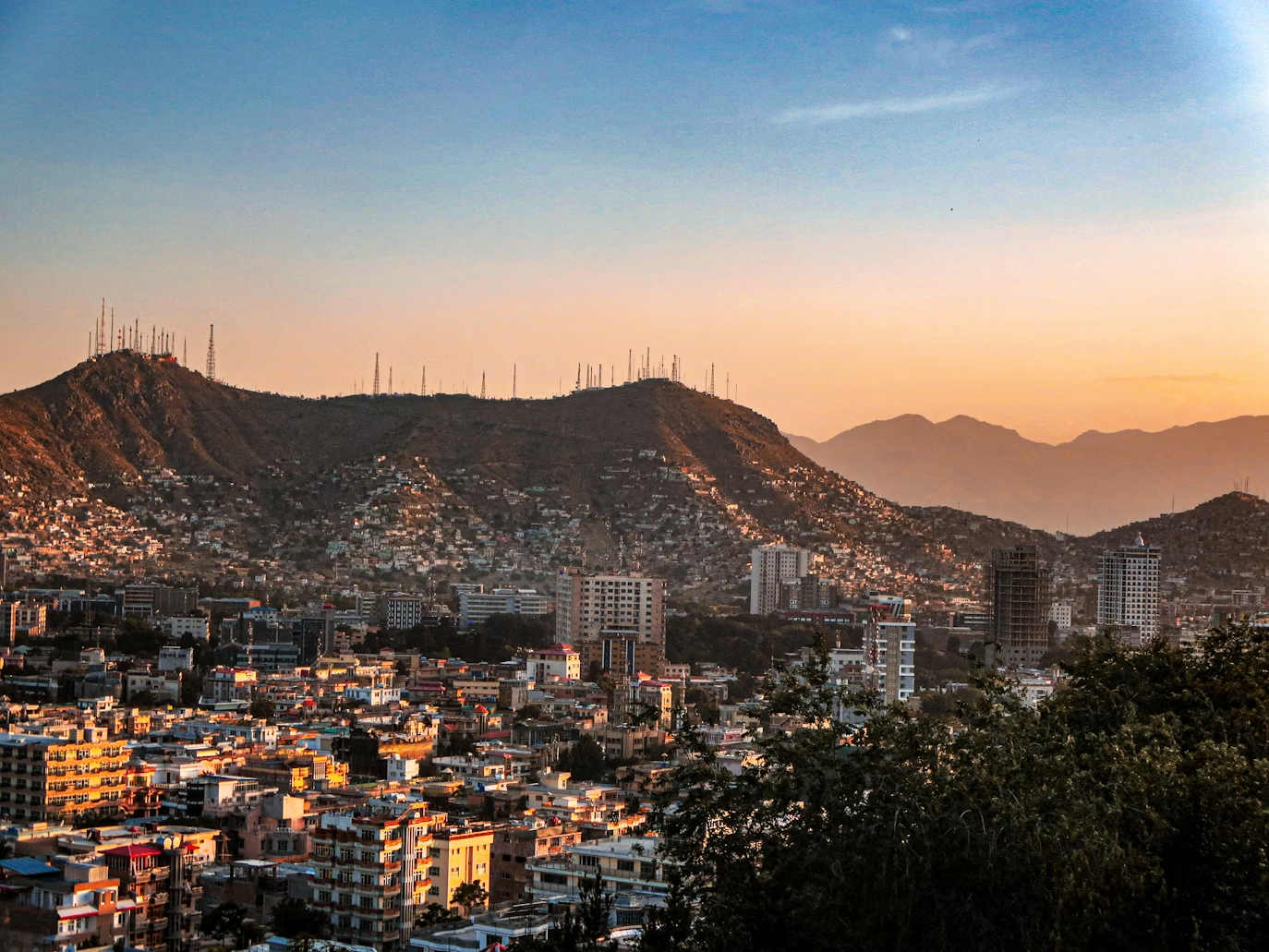
6. Afghanistan
© Unsplash / Mohammad Husaini

6. Afghanistan

Reason: Ongoing conflict and extreme safety risks

Afghanistan is not officially closed to Americans, but in reality, travel there is considered extremely dangerous. Years of conflict, political instability, and security threats have made tourism virtually nonexistent.

The U.S. government strongly advises against all travel to Afghanistan, citing risks such as armed conflict, terrorism, kidnapping, and lack of reliable infrastructure.

Even basic services like transportation, healthcare, and communication can be unpredictable.

In short, safety concerns make travel nearly impossible.

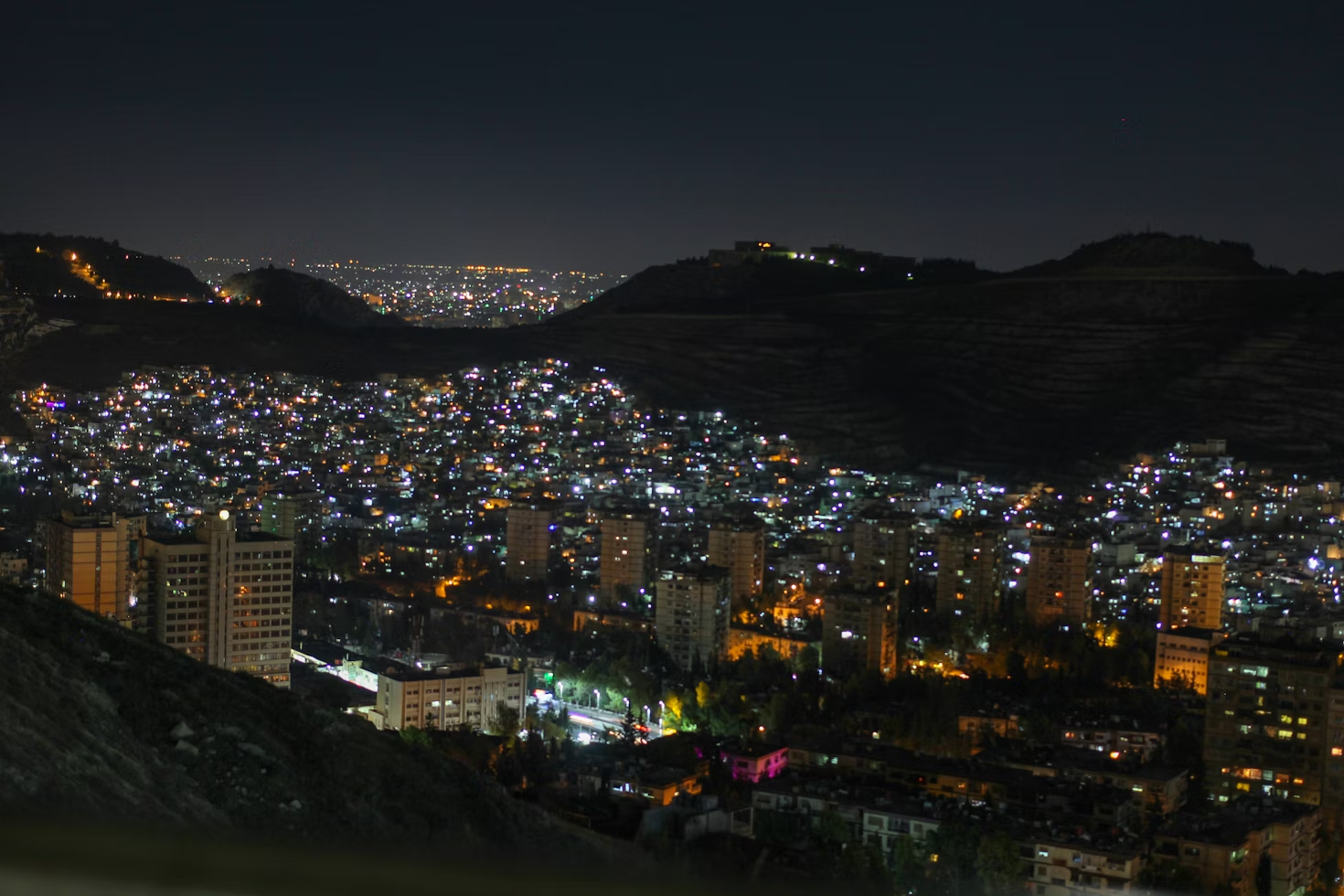
7. Syria
© Unsplash / tfoz74

7. Syria

Reason: War, instability, and government restrictions

Syria has faced prolonged conflict, which has devastated much of its infrastructure and made travel extremely dangerous. For Americans, entering Syria is not only risky but also complicated by legal and diplomatic barriers.

The U.S. government strictly warns against travel, and the situation on the ground remains unstable in many regions.

Even if entry is technically possible through certain routes, the lack of safety and support makes it an unrealistic option for tourism.

In short, ongoing conflict keeps tourists away.

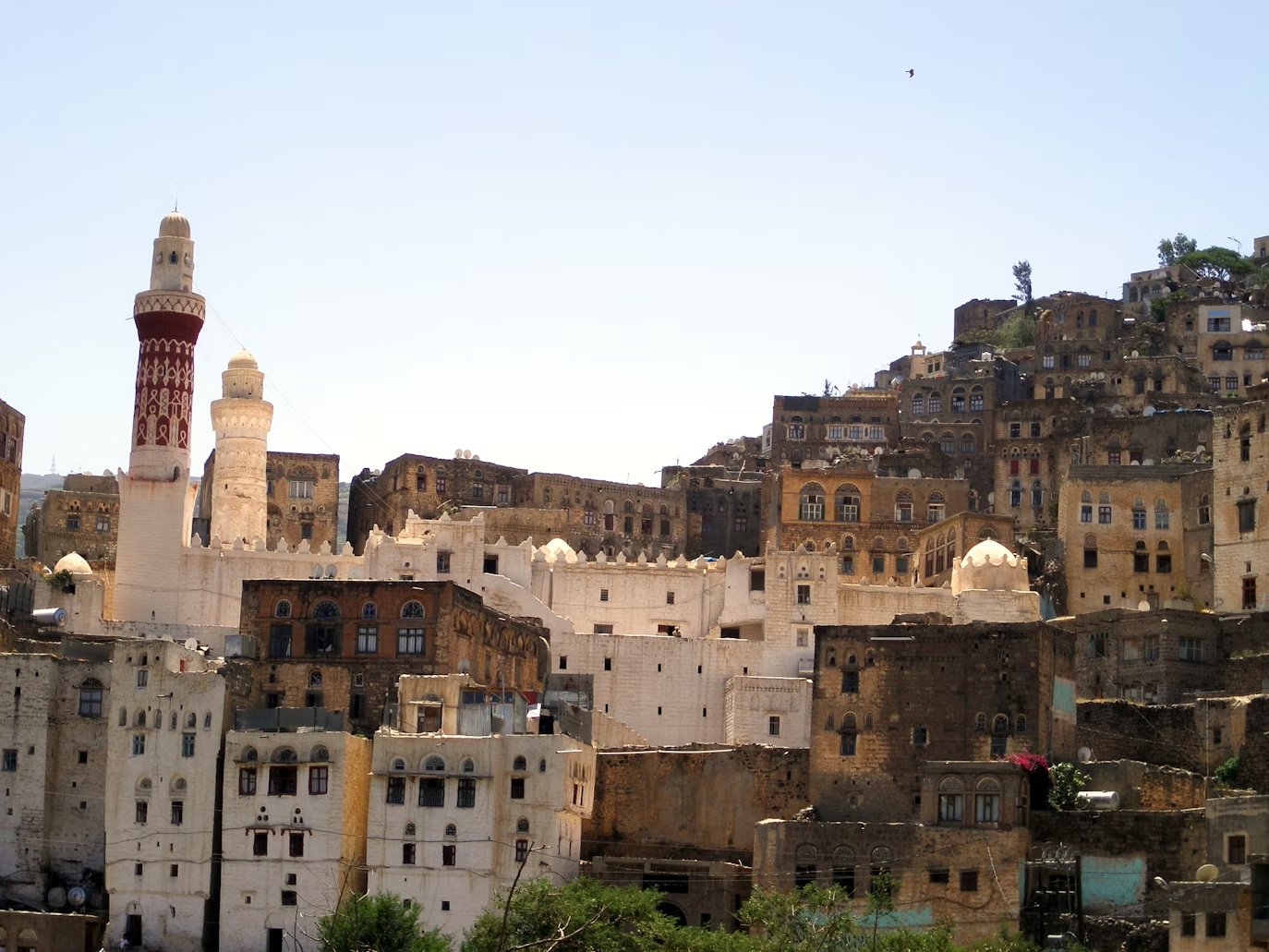
8. Yemen
© Unsplash / asamw

8. Yemen

Reason: Humanitarian crisis and security threats

Yemen is currently experiencing one of the world’s most severe humanitarian crises, combined with ongoing conflict. These conditions make travel extremely unsafe for anyone, including Americans.

Risks include armed violence, political instability, limited access to basic necessities, and minimal emergency support.

Because of this, the country is effectively off-limits for tourism.

In short, the environment is too dangerous for travel.


Comments (0)

Leave a Reply

No comments yet. Be the first to share your thoughts!